新闻今日谈
出海“必争之地”:中国新能源车企立足新加坡开启全球化新模式_我的网站

一 |
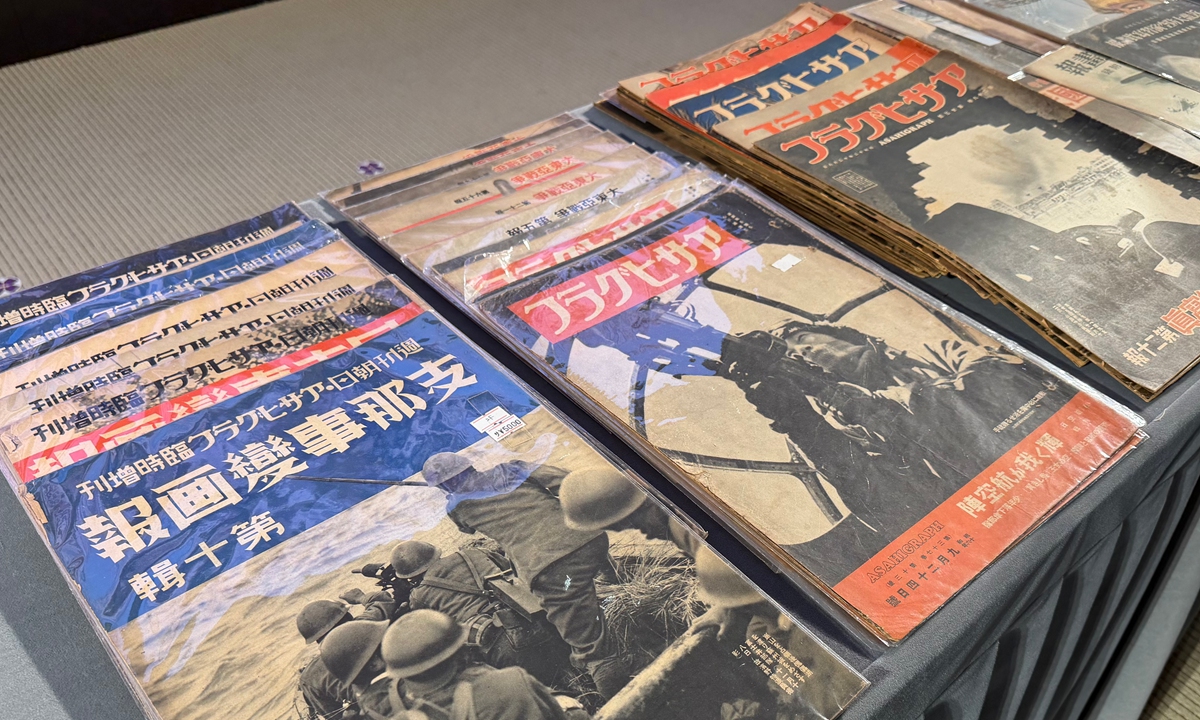
Illustrated materials related to Japan’s invasion of China, brought back from Japan by Marcus Detrez and Zhong Haosong, are displayed at the Memorial Hall of the Victims in Nanjing Massacre by Japanese Invaders in Nanjing, East China’s Jiangsu Province, on August 15, 2026. Photo: Shen Sheng/GT
August 15 this year marks the 81st anniversary of Japan’s unconditional surrender in World War II. A ceremony themed “Nanjing Will Never Forget” was held on Saturday at the Memorial Hall of the Victims in the Nanjing Massacre by Japanese Invaders in Nanjing, East China’s Jiangsu Province.
At the ceremony, a batch of newly acquired artifacts, historical materials, and documents related to the War of Resistance Against Japanese Aggression, including Japanese soldiers’ private letters, wartime postcards, educational materials on gas warfare, news compilations and French diplomatic archives, was officially added to the memorial hall's collection.
Overseas‑sourced historical archives drew wide attention among the donated materials. French youth Marcus Detrez, his compatriot Bastien Rata and Chinese youth Zhong Haosong jointly donated a set of historical documents on Japan’s aggression against China from the French diplomatic archives in Nantes, as well as Japanese‑language materials they had collected in Japan.
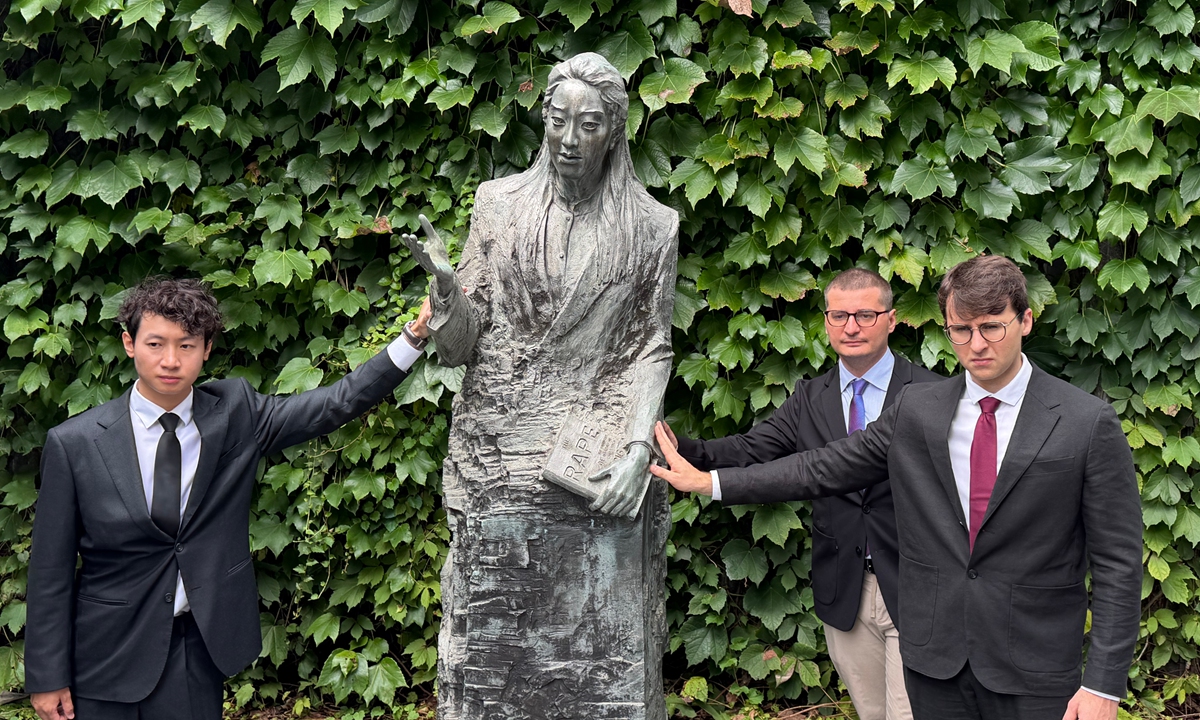
Zhong Haosong (left), Bastien Rata (center) and Marcus Dretz (right) visit the Memorial Hall of the Victims in Nanjing Massacre by Japanese Invaders in Nanjing, East China’s Jiangsu Province, on August 15, 2026. Photo: Shen Sheng/GTAccording to Bastien, the French diplomatic archives brought back this time total 891 pages. They are organized by province and cover wartime historical events in Nanjing, Shanghai, Guangdong and other areas. The archives document relevant situations during Japan’s invasion of China, while also preserving observations by French diplomatic personnel on Chinese society during the wartime period.
Marcus told Global Times on Saturday that, through these archives and related research, they have gained a deeper understanding of the brutality of the Nanjing Massacre. He said that collecting these materials was also aimed at conducting more educational work to help more people learn about this period of history.
The materials brought back from Japan by Zhong include albums of documentary paintings of the Japanese invasion of China by artists accompanying the invading Japanese army, privately taken photo albums of the invading Japanese troops, and original publications from the same period, including the Asahi Shimbun. These materials all come from original Japanese records.
The overseas historical materials were collected over an extended period. Zhong said they contacted sources online and searched through antique and secondhand book channels while continuing to collect materials in Japan.
The new collection on Saturday also includes materials gathered by Chinese youths. High school student Yu Ningpeng and Xu Weizhe donated 12 private letters written by a soldier of the 20th Regiment of the Imperial Japanese Army’s 16th Division, documenting his experiences during the invasion of China. One letter, dated December 20, 1937, contains accounts related to the Japanese occupation of Nanjing.
Meng Guoxiang, a researcher at the Institute for National Memory and International Peace Studies, told the Global Times at the event on Saturday that historical research places great importance on the sources of historical materials, with original archives holding significant value.
Some of the materials donated this time were records left by the perpetrators themselves, while archives from third-party countries such as France provide another perspective, Meng said, adding that cross-checking materials from different sources can help build a more complete body of evidence.
Notably, alongside the handover of the latest batch of archival materials, the memorial hall also held a ceremony to induct the fifth group of inheritors of the historical memory of the Nanjing Massacre. Six people were named as the latest inheritors, including descendants of Nanjing Massacre survivors, descendants of eyewitnesses, and descendants of international friends. They help pass on historical memory through family traditions, educational activities and efforts to raise public awareness of history.
In recent years, a growing number of post-1990s and post-2000s private collectors, as well as foreign nationals, have joined efforts to collect historical materials, a trend that has deeply moved and impressed Zhou Feng, curator of the Memorial Hall of the Victims in Nanjing Massacre by Japanese Invaders, he told the Global Times.
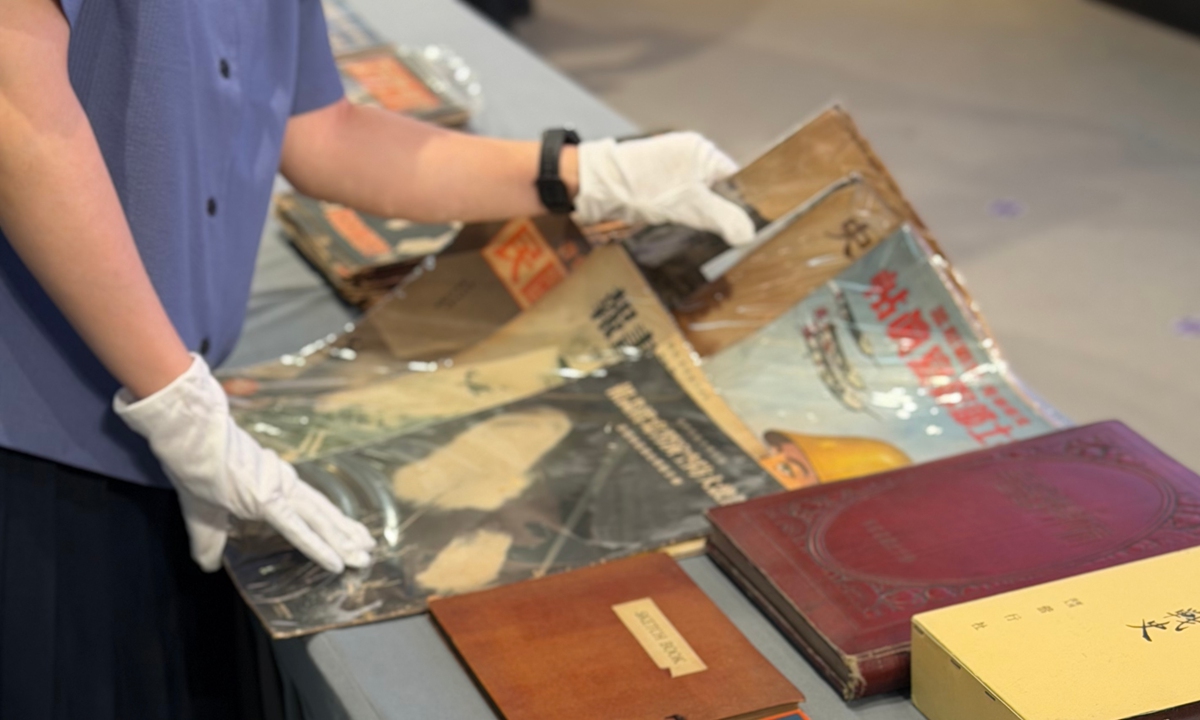
A staff member arranges archival materials documenting Japan’s invasion of China brought back from Japan by Marcus Detrez and others at the Memorial Hall of the Victims in Nanjing Massacre by Japanese Invaders in Nanjing, East China’s Jiangsu Province, on August 15, 2026. Photo: Shen Sheng/GT
Zhou said that preserving history and historical records was once widely seen as the responsibility of museums, cultural institutions and professional scholars; however, today, more and more private collectors are taking the initiative, spending their own money to collect historical materials scattered across China and overseas.
Historical memory, he said, needs to be passed down from one generation to the next. The donors come from different generations, nationalities and backgrounds, but share a common respect for historical truth and commitment to justice.
Since the beginning of this year, the memorial hall’s Nanjing Massacre Documents Center has launched a global campaign to collect relevant historical materials, receiving support from various sectors both in China and abroad. Nearly 100 donors from China and overseas have so far contributed materials to the memorial hall, Zhou said.
。 8月初,吉利旗下的高端品牌极氪宣布其车型极氪X正式登陆新加坡,首家门店计划于月底开业,与此同时,小鹏汽车的高端车型小鹏G6也在新加坡开启了预售。这些频繁的“曝光”背后,是中国车企在新加坡市场占有率的稳步提升。今年前四个月,中国品牌在新加坡新注册车辆中占比达到18.4%,超过了韩国(8.1%)、非德国的欧洲品牌(4.8%)和美国品牌(4%),中国新能源车的出海之旅,正在迈向新的高度。

二 | 从营销到融入本地市场 罗敏申路,作为新加坡心脏地带的一条重要街道,以其金融街的繁华和国际化的氛围著称,常常成为好莱坞电影的外景地。近年来,这条街道上悄然融入了更多中国元素,其中显著的一点便是比亚迪汽车展厅的设立。与传统汽车展厅的“货架式”陈列不同,比亚迪展厅内充满了绿植和动物造型,这与新加坡推广的绿色出行理念不谋而合。店内员工Chua表示:“来这里,不仅仅是为了购车,更像是一次绿色生活体验的开始。”比亚迪在新加坡的创新营销策略不止于此。

三 | 2023年8月4日,比亚迪在新加坡开设了集城市展厅与咖啡厅于一体的BYD SUNTEC,同时还推出了三家品牌餐厅,分别位于丹戎巴葛、马里士他和山景,均由BYD by 1826管理。另外,据官方消息,极氪009车型预计将在今年9月登陆新加坡市场。就在极氪新加坡门店亮相的前两天,小鹏汽车也在新加坡的中央商务区开设了一家临时快闪店。

四 | 在这里,消费者有机会亲自体验小鹏G6的宽敞空间、智能交互系统以及智能驾驶技术。同时,小鹏汽车已在新加坡启动了产品预售活动。车企出海的关键期就在当下 中国新能源汽车品牌在技术上的领先地位已不容置疑,然而,在品牌认知度、售后服务网络、本地化运营、消费者心理以及供应链管理等方面,仍面临一系列挑战。业内人士指出,未来3至5年,将是中国电动车品牌拓展新加坡乃至东南亚市场的关键时期,这一阶段的布局和表现将直接影响中国车企的国际形象和市场地位。中国社科院副研究员王鹏分析,当前新能源汽车出海面临的主要问题包括高端市场出口比例低和品牌形象树立不足。全球高端市场仍被奔驰、奥迪等传统车企占据,中国中高端车型需在服务和知名度上进一步提升。

五 | 中国整车品牌需要通过高质量的中国制造,让全球消费者认识和信任中国品牌,从而更好地讲述中国故事。2023年,比亚迪在新加坡纯电动汽车市场销量夺冠,显示出中国品牌汽车的市场竞争力。

六 | 新加坡市场的成功,不仅在于产品的销售,更在于中国车企带来的产业链解决方案。

七 | 崔东树认为,车企出海应发挥产业链优势,采取“抱团出海”策略。杨洪也强调,汽车零部件企业要做全球化企业,必须拓展海外业务,利用全球资源和技术,构建本地化的研发、生产、供应链能力。这种全产业链的出海模式,将有助于构建成本优势和供应链优势。去新加坡不只是为了增加销量 中国车企之所以青睐新加坡市场,不仅仅是因为其市场规模,更看重的是新加坡的辐射作用。新加坡作为东南亚的工业大国、金融中心和创新重镇,为中国车企提供了全方位的支持,新加坡的开放政策、完善基础设施和丰富合作资源,为中国车企在研发、生产到市场测试等方面提供了良好条件。

八 | 新加坡市场的成功,对于中国车企来说,是一个展示品牌形象的重要平台。比亚迪K9电动客车在新加坡的成功运营,为其在印度市场的扩张奠定了基础。

九 | 新加坡的影响力辐射整个东南亚地区,中国车企可以利用这一优势,快速向周边国家扩张。然而,中国车企在东南亚市场的挑战依然严峻。

十 | 日系车企凭借其优秀的体系能力和服务能力,在东南亚市场占据较大份额,中国车企需要与合作伙伴共同努力,构建起完善的销售和服务体系,以提升消费者满意度。新加坡市场,作为全球高消费市场的代表,是中国车企锻造全球服务能力的试验田。

十一 | 未来,中国车企在提供差异化产品的同时,还需关注服务质量,以赢得更多消费者的青睐。新加坡市场的布局,不仅是对中国车企产品力和品牌形象的考验,更是对其服务能力和全球化运营能力的挑战。通过在新加坡市场的深耕细作,中国车企有望在全球舞台上树立起更加坚实的品牌形象,为更大的国际市场竞争打下坚实基础。
Current article:http://www.zhanggengsenchaiweikeng.cfd/9punp/6gd.doc
Published on:16:30:00
 微信
微信 移动端
移动端


