


裸婚时代
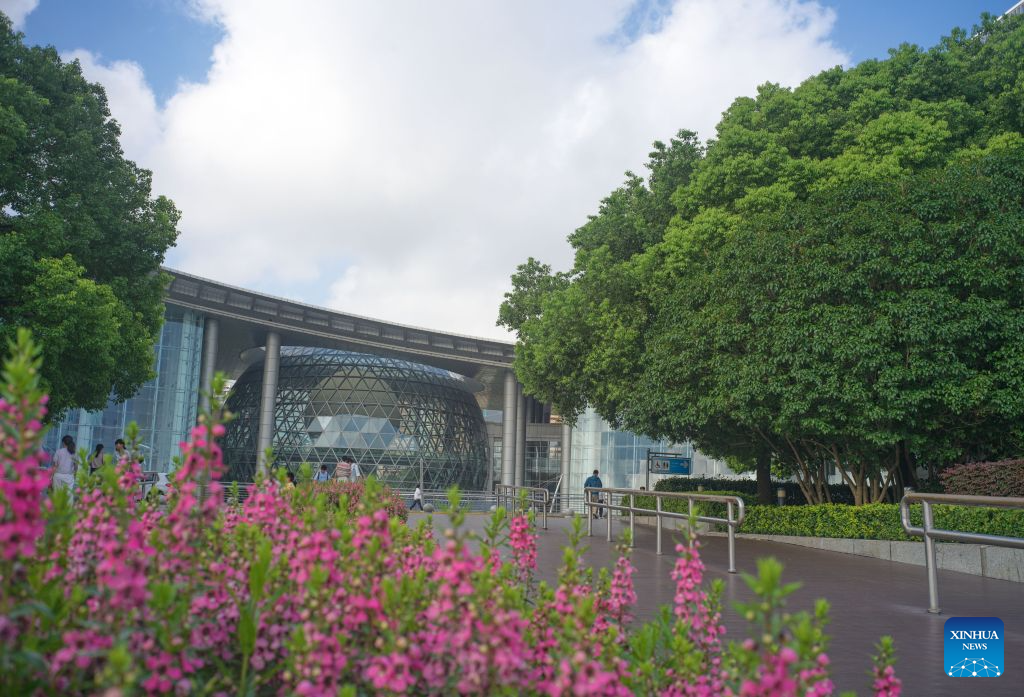
Shanghai sci-tech museum welcomes 100 millionth visitor amid tech travel boom_我的网站

一 |
The U.S. tallied about 15,000 reported hospitalizations of people with COVID-19 over the seven days ending Aug. 19. Though a far cry from previous totals during the pandemic, that’s a 19% increase from the week prior, continuing a climb that started at the end of June after hospitalizations reached a recent weekly low point of approximately 6,300.
Relative to population, the latest tally equates to 4.5 people per 100,000 admitted to the hospital. By state, Hawaii and Florida saw the highest rates of new COVID-19 hospitalizations, at 9.8 and 9.7 per 100,000, respectively – more than twice the national rate. Louisiana (6.6), Alabama (6.5) and Mississippi (6.5) had the next-highest rates.
Among patients visiting emergency departments, 1.9% were diagnosed with COVID-19 nationally. Hawaii and the southeastern states of Mississippi, Florida, Alabama and Louisiana saw shares higher than 3%.
Seven counties were described by the CDC as having a “high” level of COVID-19 hospital admissions, with rates of 20 per 100,000 or higher. Several counties in Mississippi – Noxubee, Lowndes, and Clay – as well as Lamar County, Alabama, were reported to have seen 26.4 new hospitalizations per 100,000 people. Another 117 counties were said to have a “medium” level of COVID-19 hospital admissions – with rates between 10.0 and 19.9 per 100,000 people.
Notably, the CDC’s county hospital admission figures are calculated at the Health Service Area level, which can span multiple counties. This means counties within the same HSA will share the same admission rates in the data.
The counties with the highest rates of COVID-19 hospital admissions per 100,000 people were:
- Lamar County, Alabama - 26.4
- Clay County, Mississippi - 26.4
- Lowndes County, Mississippi - 26.4
- Noxubee County, Mississippi - 26.4
- Fisher County, Texas - 25.8
- Mitchell County, Texas - 25.8
- Nolan County, Texas - 25.8
- Jefferson County, Georgia - 19.6
- Washington County, Georgia - 19.6
- Claiborne Parish, Louisiana - 19.1
- Fillmore County, Nebraska - 19.1
- Thayer County, Nebraska - 19.1
- Stevens County, Kansas - 18.2
- Furnas County, Nebraska - 17.6
- Harlan County, Nebraska - 17.6
- Phelps County, Nebraska - 17.6
- Rutland County, Vermont - 17.2
- Foard County, Texas - 16.8
- Hardeman County, Texas - 16.8
- Wilbarger County, Texas - 16.8
Because hospitalization rates are calculated per 100,000 people, it’s worth noting that even a relatively small number of hospitalizations in a small community can lead to a higher hospitalization rate.
Other measures also can give a sense of the current state of COVID-19. Though the CDC has ceased publishing a "community level" metric that incorporated COVID-19 case rates and hospital admissions – as well as the average percentage of hospital beds occupied by COVID-19 patients – health departments can submit the results of their sampling of wastewater for the virus to the CDC via the National Wastewater Surveillance System.
Since the U.S. passed 1 million cumulative deaths tied to COVID-19 in the spring of 2022, more than 138,000 additional people have died in connection with the disease, according to provisional data from the CDC.
While the latest tallies are down from a recent peak of about 3,900 deaths in a week in January – and well below the maximum peak of around 26,000 deaths per week in early 2021 – data indicates hundreds of people have died in connection with COVID-19 of late. Maryland and Florida each saw 3.4% of their total deaths attributed to COVID-19 during the week ending Aug. 19, doubling the national percentage.
。 
Zhang Zhiheng, a boy from east China's Shandong Province, was the landmark visitor. He visited the museum with his parents on the second day of his first trip to Shanghai.
Since opening its doors to the public in late 2001, the museum has grown into one of China's most popular science and education destinations. Through a wide range of science and technology activities and programs, it remains dedicated to boosting public scientific literacy and sparking curiosity in visitors of all ages.
After being closed for over two years for upgrading, the museum reopened early this year. It now also includes two branches: the Shanghai Natural History Museum and the Shanghai Astronomy Museum.
Back in 2001, the proportion of Chinese citizens with scientific literacy was only 1.4 percent, and the figure had risen to 16.74 percent by 2025, according to official data.
As public interest in science has grown, visits to science and technology museums have increasingly become part of everyday life.
For many families, museums have become a popular destination during holidays and weekends, offering children opportunities to expand their knowledge and broaden their horizons.
"The biggest change I feel during my museum visits is that science and technology keep advancing," said Zheng Qina, a post‑90s visitor from Shanghai. She was nine years old when she visited the museum in 2001. Today, her five‑year‑old son is also a regular visitor.
The trend is also extending to international travelers. With China's inbound tourism gaining momentum following eased visa policies, science museums have emerged as an increasingly popular destination for overseas visitors seeking a closer look at the country's technological development.
From January to July this year, the Shanghai Science and Technology Museum and its two branches received nearly 200,000 foreign visitors, accounting for nearly 5 percent of the total visitor numbers.
Francisco and his parents, a family from Italy, were among the visitors on Tuesday. After touring an exhibition on green energy, Francisco said he was deeply impressed by displays showcasing China's nuclear and hydrogen energy technologies.
In recent years, China has made major advances in fields ranging from artificial intelligence and humanoid robots to quantum science, green energy, space technology, life sciences and physical sciences. Science and technology museums offer visitors an opportunity to explore some of these developments through exhibitions and interactive experiences.
For Ni Minjing, director of the Shanghai Science and Technology Museum, a notable change among visitors is that they have shifted from passive recipients of knowledge to more active explorers of science.
"Teenagers in particular now have abundant channels to acquire knowledge. The role of science and technology museums can no longer be merely about resolving doubts," Ni said. "Instead, through diverse forms of science popularization, museums should inspire visitors, especially young people, to think and create."
"We will continue to innovate the way we popularize science, enrich science-related content, promote the spirit of scientists and foster a culture of innovation, so as to spark young people's curiosity, imagination and desire to explore," Ni added.

。
Current article:http://www.zhanggengsenchaiweikeng.cfd/f97a/59rmjp0.docx
Published on:21:12:08