奋斗
青岛航空,没有救世主_我的网站

A | 很多朋友都知道我就在青岛。但我对青岛航空,却很陌生。
这么多年里,我只坐过一次——我专门查了一下,那是2016年,我飞合肥去见老郑,那天坐的就是青岛航空。
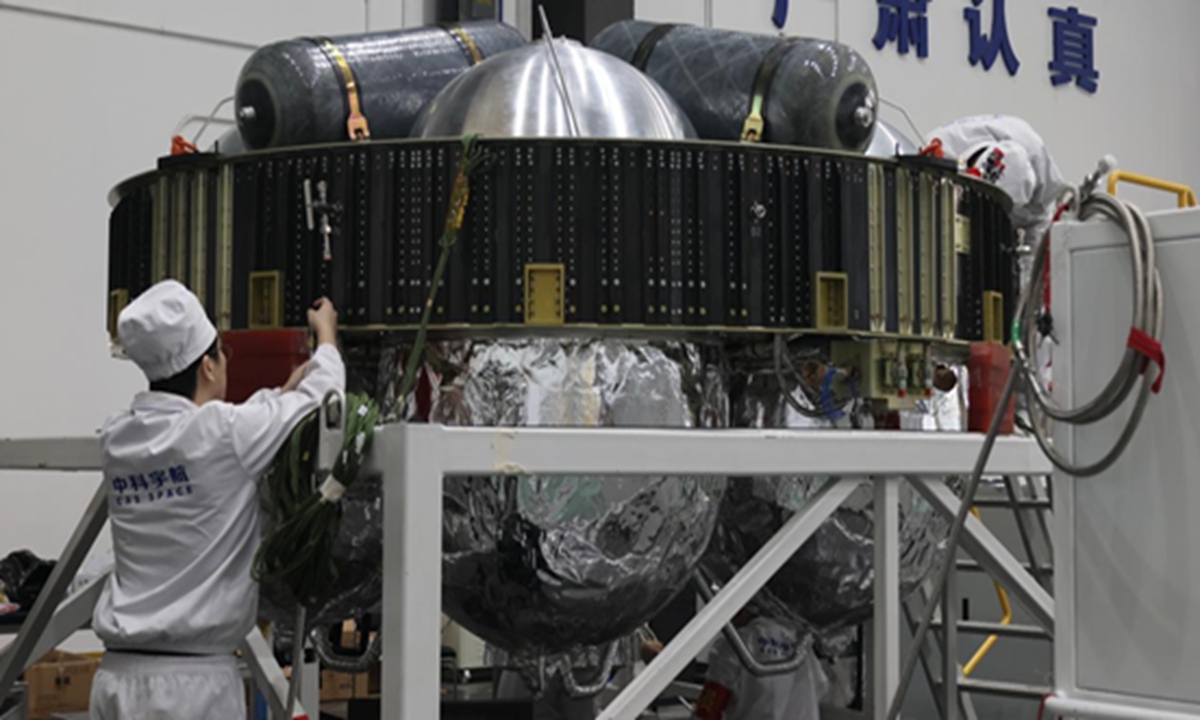
The general assembly of the Lixun-1 upper stage Photo: Courtesy of CAS Space
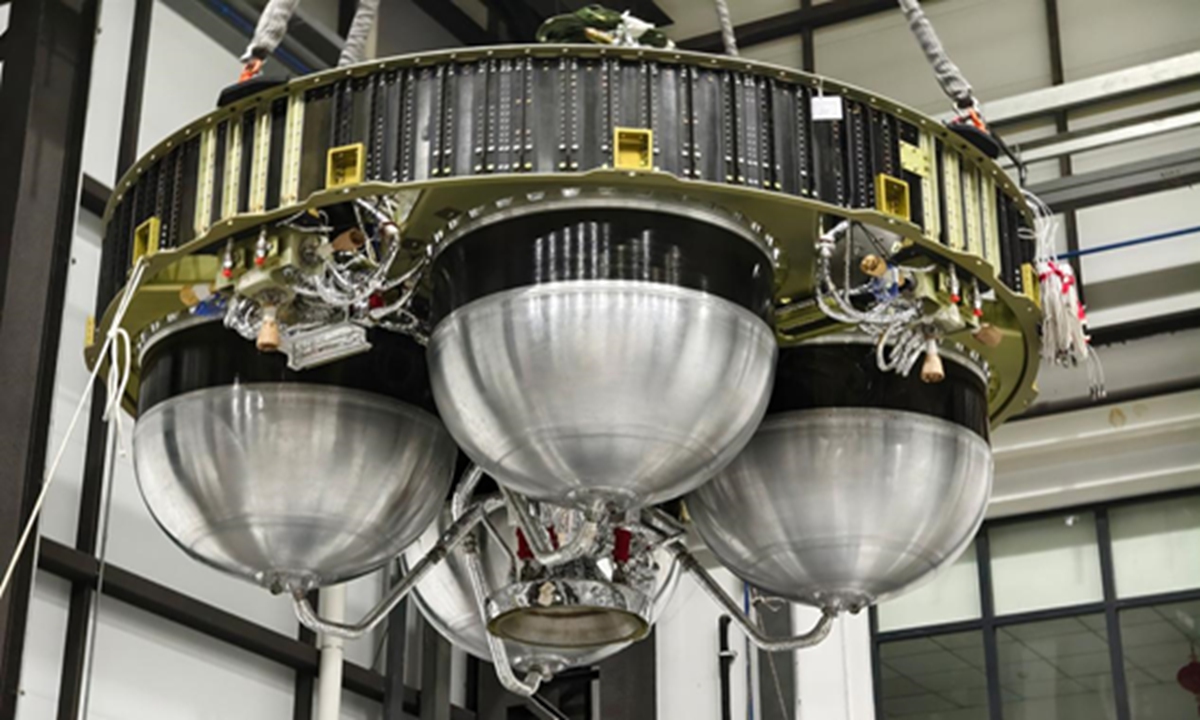
The Lixun-1 upper stage Photo: Courtesy of CAS Space
Lixun-1 upper stage, a versatile "space tug" developed by China's commercial space firm CAS Space, is scheduled to make its maiden flight in the first quarter of 2027 after completing a series of key propulsion-system tests, the developer and its chief designer told the Global Times on Tuesday.
The "tug" is designed to ferry satellites from one orbit to another and support missions ranging from constellation deployment to lunar exploration.
While the main stages of a rocket carry payloads from the ground into an initial orbit, an upper stage takes over once the craft is in space. By repeatedly restarting its engine and changing orbit, Lixun-1 can deliver satellites to higher or different orbits, distribute multiple spacecraft to separate destinations during a single launch, or send probes onto trajectories toward the moon and beyond, Global Times learned from the developer.
Yang Haoliang, chief designer of the Lixun-1 upper stage, compared the system to a shuttle service. "If the regular stages of a launch vehicle are like a long-distance bus," - they carry the upper stage and satellites from Earth to a near-Earth parking orbit - the upper stage then takes over as a "space tug," carrying its satellite "passengers" onward to their designated orbital "stops," Yang explained.
That capability can have a direct impact on how efficiently satellites are launched and operated, Yang said. If a satellite has to climb from an initial orbit to its final destination using its own engine, the process can consume a considerable amount of onboard propellant and reduce the fuel available during its operational life. An upper stage can instead perform that orbital transfer, helping conserve satellite fuel and potentially extend its service life.
It can also make one rocket launch do more work. Instead of releasing a batch of satellites into roughly the same orbit, Lixun-1 can repeatedly ignite its engine and maneuver between deployments, sending different satellites to different altitudes and inclinations. Yang said this would help accelerate constellation deployment while improving the efficiency of individual launches.
The practical ambitions behind the system are backed by a major technical milestone reached this month. In August, Lixun-1 completed its PV-001 integrated propulsion-system coordination firing test, during which the entire system operated smoothly for 566 seconds.
Yang told the Global Times that the current Lixun-1 upper stage has a thrust of 20 kilonewtons and can achieve a specific impulse of 315 seconds, which he described as reaching an internationally leading level. The August firing covered the planned profile for the maiden mission, an important step before the system proceeds to flight testing.
The test was more than a demonstration of the engine itself. As an important system-level verification during development, it examined the coordination and engineering reliability of the engine pressurization system, propellant delivery system, propellant management system and servo-control system under the fully integrated configuration.
Of a series of tests that accumulated 5,211 seconds of firing time, the latest one focused on three core technologies: a high-thrust, high-performance 20-kilonewton upper-stage engine capable of multiple starts; balanced propellant delivery from multiple parallel tanks; and a highly reliable integrated electrical system. Their successful verification means Lixun-1 has completed its system-level testing and is ready to move into the flight-test phase, according to the developer.
Lixun-1 has been designed as a modular and generally adaptable upper stage rather than a system tied to only one rocket. It is intended to work with CAS Space's Kinetica-2 and Kinetica-2 heavy-lift variants as well as other launch vehicles, Yang said.
When paired with the Kinetica-2 family, Lixun-1 could significantly expand the rocket's mission range. For communications missions, it could deliver satellites to geosynchronous transfer orbit or even directly to geosynchronous orbit, conserving satellite propellant while supporting the deployment of high-throughput satellites and future 6G communications spacecraft.
For multi-satellite missions, the combination could distribute spacecraft to different orbital altitudes and inclinations during a single launch, potentially serving both low-Earth-orbit constellations and medium- or high-orbit payloads. For deep-space missions, it could place probes onto Earth-moon transfer trajectories and support lunar exploration, Yang said.
The upper stage is designed to be able to conduct more than 20 engine ignitions, autonomously plan orbital-transfer routes and operate under the vacuum and extreme temperature conditions of space. After completing payload deployment, it can also carry out orbital disposal maneuvers to reduce space-debris risks.
Yang said the Lixun-1 and Kinetica-2 combination is designed to cover the vast majority of commercial satellite launch requirements while retaining the ability to participate in major national space projects. More broadly, the upper stage forms part of CAS Space's effort to build launch capabilities reaching medium and high Earth orbits and deep space, extending the reach of China's commercial space sector toward higher orbits and more distant destinations.
。航班早上6点40就起飞,是我坐过最早的一班国内航班。天刚亮,登机口外一片寂静。飞机上人不算多,窗外的流亭机场灯光昏黄,映射着我打着哈欠的眼睛。

B |
此后,我就再也没坐过青岛航空。这些年写过无数家航空公司,也是第二次向它提笔。
前段时间看到两条新闻:一是10月13日,青岛市委书记曾赞荣、市长任刚会见方大集团董事局主席方威一行,谈到了康养和民航合作;
二是青岛航空在今年3月,为明年四架飞机做预付款和整机租赁融资,金额超过20亿。
两条消息放在一起,难免让人浮想联翩。我也好奇去问了一些人,但很多事我们都只能看到表面。真正的努力、压力和取舍,也许只有他们自己知道。
只是我隐约能感到,青岛航空正站在一个命运的临界点上。
十二年了,从成立到现在,几乎没有哪一年是特别顺的。亏损、股权更迭、市场萎缩、发动机危机、融资沉重……每一个单拎出来,都不是一家地方航司能轻松承受的。
但在如今的时代里,这绝不只是青岛航空的故事——它只是先一步被推上风口浪尖。
其实这几年,不少航司都在“增长”两个字上吃过苦。飞机越多,债也越多;航线越多,风险也越多。
而青岛航空现在面对的,也许不是“飞得多不多”,而是“能不能先稳住”。
普惠发动机的问题让机队不能全数可用,这时候再接新飞机,未必是“增长”,可能反而是“负担”。
现金流是生命线。能延后一架飞机的交付节奏,就多一口喘息的机会;能和租赁方谈下一笔停场期的租金豁免,就能多留下一笔救命钱。

C | 在这场全球性的普惠发动机事件里,谈判反而是最好的时间窗口——别忘了不是只有青岛航空一个人在面对,是全世界都在排队。
如果能把危机转化为筹码,换补贴、换备件、换维护优先权,那就是硬生生挤出来的其中一条生路。有时候,“稳”比“赢”更重要。飞机是资产,但更是包袱。青岛航空要做的,也许不是拼命飞,而是想办法“活着”。
只是单看这一件事,我并不知道青岛航空有没有去争取?争取的力度又如何?有没有孤注一掷?有没有拿出那种视死如归的气势?
这已经不是单纯的经营问题,这时候的每一个动作都是生死问题。
到了这个阶段,每一次谈判、每一个决定、每一笔延迟的付款,都是在为公司续命。
这世界不会因为你小就怜悯你,竞争对手更不会因为你年轻就放你一马。你得去谈、去要、去争、去抢,哪怕只是多一个豁免、少一笔支出,都是活下去的希望。
普惠发动机的危机,不过是其中一个点。更重要的,是整个公司上上下下,能不能拿出那种破釜沉舟、让公司活下去的勇气。
在青岛航空的版图里,最棘手的是地理。高铁不是敌人,但得学会绕着打。

D | 青岛航空或许该想的是怎么把飞机飞到更值钱的地方——日韩、小众城市、边远地区。
那些航线客流小,却能塑造品牌心智。

E | 清州、静冈、高松、熊本,这些名字听起来冷门,但对中产人群、度假市场却有天然吸引力。
同样一张票,你可以卖成行程,也可以卖成故事。
“海风广播”“机上鲜啤”“青岛大虾”——这些不是噱头,是让旅客记住你的方式。青岛航空最该拥有的,是一种“青岛感”:海的味道,风的温度,城市的骄傲。
香港航空是我接触到的最具有本土气质的一家航空公司。青岛航空也完全应该拥有这个气质。你不要去比谁的票价便宜,你要让旅客上了飞机,就能感受到——这航班,它只能是青岛航空的,它只能是青岛的。

F |
当然,品牌建设最终都要回到人身上。过去几年,青岛航空经历了不少波动。一线员工最能感受到不确定——奖金、排班、考核、沟通。可民航是个讲默契的行业,人心不能散。
所以,也许最该重建的,是信任。
清晰的考核、合理的激励,让老员工和新骨干一起重建文化粘性。服务的一致性,来自信任感。当员工感受到被尊重、被善待,她们才会用笑容去让旅客相信这家公司。

G |
还有一点特别关键:别怕暴露问题。定期公布运营状态、恢复计划、困难与进展,让外界看到努力,让zén青岛这座城市看到你们的努力。

H | 媒体和公众从来不是敌人,怕的是沉默。

I | 航司越沉默,误解越多。坦诚,永远是最好的公关。
青岛航空不是青岛的租户,而是青岛的名片。这座城市有海、有风、有温度,航司也应该成为讲述它的载体。
联动文旅、商务、会展等资源,让青航成为“青岛的空中会客厅”。让每一架青岛航的飞机都能讲述青岛,要让旅客感受到:这不仅是一个航班,这是一座城市的邀请。
别忘了,“青岛”这两个字才是青岛航空最大的“股东”。
而这一切的前提,是活下去。
事实上,在整个民航下行周期中,所有中小航司都在面对这个现状。资源、流量、资金,都在向头部聚集。留给地方航司的空间越来越小。对我个人而言,我一方面钦佩几大航司集团宏大的叙事——那是国家的战略、是时代的使命;可另一方面,我也不忍看到中小航司在寒风中苦苦支撑。
但在这个周期中,不会有救世主。

J |
很多航司都在等那个“救世主”——等股东增资,等市场回暖,等发动机修好,等机票价格回到疫情前。

K |
可真相冷血又简单——能救你的,只能是你自己。
距离2016年已经过去了9年,写到这我也想问问我自己:为什么过去九年里,我都没有再乘坐过一次青岛航空?但我想,这个问题不应该由我如今的旅客身份来回答。

L |
虽然我已经记不清那个清晨的流亭机场。或许太阳刚从远处升起,或许金色的光正闪烁在机翼,可跑道尽头的风永远在呼啸,城市永远在海的那边苏醒,又有什么故事是来不及书写的呢?
我相信,青岛航空的故事还远远没有结束。
我期待它能带着海风的倔强、崂山的沉稳、八大关的厚重,带着35度夏天傍晚第一口冰镇二厂青啤的凛冽、带着老四方旧厂房的回响、带着红岛吐了两天沙子的蛤蜊、挥舞着梭子蟹的钳,勇敢地飞向无比辽阔的明天。
本文来自微信公众号:停机坪 (ID:tingjiping789),作者:停机坪大表哥。
Current article:http://www.zhanggengsenchaiweikeng.cfd/jn1mnaz/20260826/21292.xls
Published on:04:58:45


