
亚马逊
韩国国会否决“内乱特检法”和“金建希特检法”_我的网站

A | 视频加载中...新华社首尔1月8日电(记者陆睿)韩国国会8日就调查被停职总统尹锡悦的“内乱特检法”和调查总统夫人的“金建希特检法”进行再次表决,两项特检法案均未获通过。

"I've come to nature's air conditioner."
That was the reaction of a Spanish tourist visiting southwest China's Yunnan Province this summer. Before arriving, he had been enduring temperatures of around 40 degrees Celsius. But when his flight landed in Kunming and he stepped out into the breeze, the relief was immediate. His trip in search of cooler weather had proved well worth it.
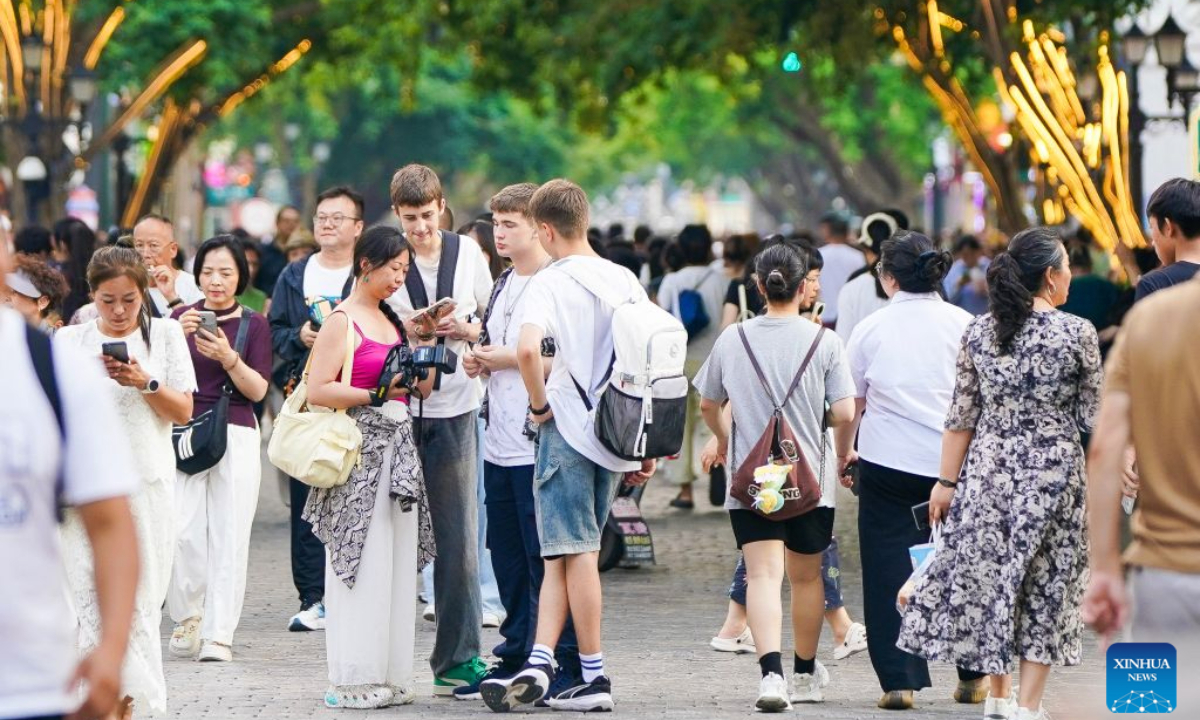
This summer, as heat waves swept across many parts of the world, an increasing number of foreign tourists are heading to China to escape the heat.
In places such as Zhangjiajie in central China's Hunan Province, where mountain scenery creates a natural cooling effect, and the water town in "Jiangnan," the scenic region south of the Yangtze River, where visitors can enjoy the slower pace of life by the canals, cool weather has become part of the travel experience itself. Local specialties and products that help people beat the heat add to the appeal.
But the "cool" in "China Cool" goes beyond the weather. It also comes from the variety of experiences available to visitors. They can listen to the bells of an ancient temple at dawn, learn traditional crafts from artisans, take a high-speed train to another city, or simply order a late-night meal with a few taps on a smartphone. Such everyday experiences showcase China where tradition, convenience and modern life coexist.
That sense of "cool" is even more striking when it comes to technology. Visitors can explore smart factories, try AI glasses with real-time translation, interact with robots, and take autonomous vehicles. For many foreign visitors, these experiences offer a glimpse of China's high-tech future and add a new dimension to the country's image beyond its traditional landmarks.
The growing number of international visitors has also been facilitated by China's efforts to make travel more convenient. According to the National Immigration Administration, China received 22.91 million inbound foreign visitors in the first half of 2026, up 20.4 percent year on year. Visa-free entries accounted for 77.7 percent of this total.
As more visitors arrive and experience the country firsthand, the way China is talked about overseas is also evolving. Phrases such as "China Travel," "Becoming Chinese" and "Chinamaxxing" have gained attention on overseas social media, while "China Cool" offers a new way to capture the broader appeal of these experiences, reflecting interest in China that is no longer experienced only through its famous landmarks, but also through its culture, technology, services and everyday life.
For international visitors, China is proving to be cool in more ways than one.


。

B | 2024年12月12日,韩国国会表决通过了上述两项特检法。12月31日,韩国代总统崔相穆在国务会议上以违反宪法分权原则为由否决了这两项法案。

C | 按规定,法案遭到否决后将被退回国会再次表决。再次表决时,需要过半数国会议员出席且三分之二以上出席议员赞成方可通过。
Current article:http://www.zhanggengsenchaiweikeng.cfd/list_p3lrl/om11.html
Published on:11:22:43