
v字仇杀队
At Least 12 Dead After School Bus Plunges Into Gorge in India's Himachal Pradesh_我的网站

一 | At least 12 people, including schoolchildren, were killed and three suffered serious injuries after a bus fell into a gorge in India's Himachal Pradesh on Monday morning.,There were around 15 passengers, including school staff and students, who were travelling from Kullu to Sainj on Neoli-Shansher road in the Sainj Valley, officials said.,© Photo : TwitterVisual of the damaged bus rolled off a cliff in India's Himanchal Pradesh state's Kullu districtVisual of the damaged bus rolled off a cliff in India's Himanchal Pradesh state's Kullu district© Photo : Twitter,Prime Minister Narendra Modi's office expressed grief over the tragic incident and ordered the local administration to provide all possible assistance to those affected.,© Photo : TwitterIndia's Prime Minister Narendra Modi expressed grief over the tragic bus accident in Himachal Pradesh state's Kullu districtIndia's Prime Minister Narendra Modi expressed grief over the tragic bus accident in Himachal Pradesh state's Kullu district© Photo : Twitter,District officials and rescue teams rushed to the spot and managed to save some passengers, who have now been taken to a nearby hospital.,Himachal Pradesh state chief Jairam Thakur and his team are supervising the relief and rescue operation. An investigation has been launched.,#UPDATE Himachal Pradesh | Death toll rises to 11 in the Kullu bus accident, rescue work on. pic.twitter.com/jCEP8v6fOe— ANI (@ANI) July 4, 2022,Want to know more? Check out our Koo & Telegram accounts!,Koo: https://www.kooapp.com/profile/sputniknews,Sputnik India: https://t.me/sputniknewsindia。
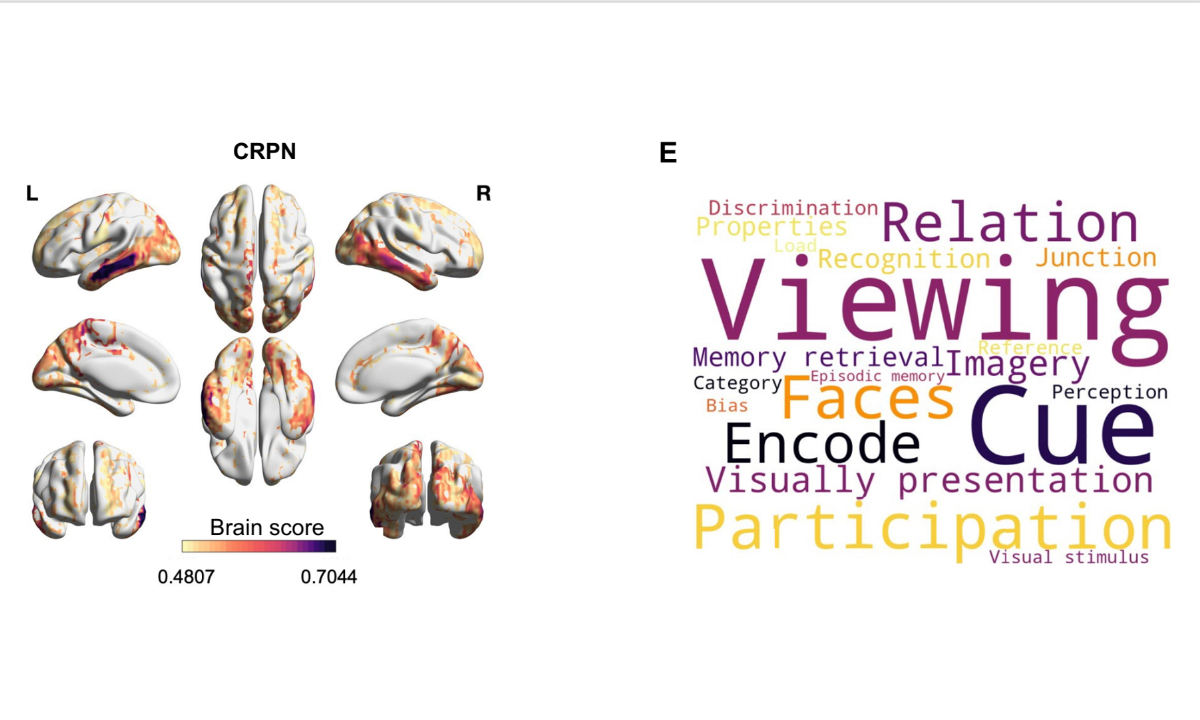
Chinese scientists have developed a “brain-reading” AI model that could help predict the risk of depression among adolescents up to four years in advance by analyzing how humans respond to facial expressions, a technology expected to inspire future development of embodied intelligent humanoids capable of perceiving human emotion and thoughts through nuanced facial cues.
WHO data show that around 332 million people worldwide have depression, about one-third of whom have treatment-resistant forms of the condition. In China, an estimated 95 million people suffer from depression, National Business Daily reported, citing statistics from the China Mental Health Survey.
Using data from a population-based longitudinal adolescent cohort recruited across several European countries, the research team led by Lu Han, assistant professor at the School of Artificial Intelligence, Shenzhen University, has built an AI model that predicted which 19-year-olds were more likely to develop depression at the age of 23. The predictions were backed up by an independent clinical cohort of individuals with depression. The team’s paper was published in the journal Science Advances this month.
According to Lu, the study used brain scans taken at age 19 to predict depression-related symptoms at age 23. The study focuses on adolescence because the transition from adolescence to early adulthood is a key developmental period when depressive symptoms can increase rapidly. The earlier risks are identified, the greater the opportunity for prevention, Lu told the Global Times on Monday, adding that the findings need to be further validated in middle-aged and older adults and across different ethnic groups in future research.
In this study, the researchers analyzed data from adolescents in the IMAGEN, a population-based longitudinal cohort recruited across several European countries. At age 19, participants underwent an fMRI emotional-face task, and their emotional symptoms were assessed using standardized questionnaires. Genetic data obtained from blood samples were also analyzed, and participants were followed up at age 23. The researchers examined whether neural representations of angry faces at age 19 were associated with emotional symptoms and could predict elevated emotional symptoms four years later.
According to Lu, people without depression can more easily distinguish emotional changes based on others’ facial expressions and respond accordingly – for example, responding with friendliness to a smiling expression. But people with depression cannot do this, and are more likely to assume people are angry with them.
A brain-aligned deep-learning model developed by Lu’s team suggested that those participants whose brains were less able to distinguish between different facial emotions and tended to perceive others as angry were more likely to develop symptoms of depression and anxiety in adulthood.
The hypothesis that adolescents at risk of depression may respond differently to other people’s facial expressions than those without such risk based on the negative information processing bias long observed in depression research: people at risk of depression are more likely to notice, interpret, or remember negative social information, Lu said.
The researchers focused on angry facial expressions because they signal social threat and rejection, which are closely linked to interpersonal difficulties and negativity bias associated with depression. They hope to further understand how this bias develops within the visual system.
Building on this, they created a deep learning model, which mimics how the brain processes visual information, to predict how the brain encodes abstract emotional concepts such as anger.
They found that 19-year-olds whose response to facial expressions was skewed in favour of negative emotions or memories were the most likely to develop some form of depression.
Based on these findings, Lu’s team then developed a marker that can identify possible warning signs.
According to Lu, the study found that the computational biomarker was linked to the depression-related variant rs11123030 and polygenic risk for depression, suggesting that genetic susceptibility may affect emotional perception. It also provided predictive information beyond family stress and socioeconomic factors, complementing rather than replacing environmental risk factors. Therefore, depression is neither purely genetic nor purely psychological, but a complex mental disorder arising from the interplay of genetic susceptibility, brain development, emotional and cognitive processes, and life experiences.
According to Lu, the study is also expected to advance AI by aligning deep neural networks with human brain activity and using parameter perturbations to probe neural mechanisms, allowing models to both predict and explain how biases may arise.
The findings suggest that future affective computing and embodied AI should go beyond simply labeling facial expressions, incorporating visual details while preventing prior assumptions from overriding real-time sensory input, Lu said, adding that the findings could provide valuable insights for developing more interpretable robotic perception systems that more closely emulate the way humans process emotions.
。
Current article:http://www.zhanggengsenchaiweikeng.cfd/news/20260826_93932.xls
Published on:19:23:42
我的网站相关阅读
我的网站最新文章
- 김민석 "이진숙 '여자 전두환'으로 불러드리자"
- 新西兰这家绿超又发现老鼠 当局称“不可避免”......
- RM Drops Surprise Photo From BTS' Rehearsal
- 大乐透26077期开2注一等奖
- 漳州消费品以旧换新下乡村活动走进台商投资区
- 当智能手机行业不再繁荣时,索尼会退出智能手机市场吗?
- 科隆展参展阵容炸裂!数十款大作即将登场
- 再分化!煤炭、银行大幅跑赢 该买红利资产了?
- 煤炭概念持续走强,美锦能源涨停
- 新增3起猴痘病毒!新加坡紧急应对,已设立体温检测站;入境中国需申报
- “白海豚”离开浙江 今天起西湖景区恢复开放 雨还得下一周 今天浙北有中到大雨,局部暴雨
- 北京国管与工信部中小企业发展促进中心开展座谈交流
- 注意!近期这种毒虫频现,有人一不小心就中招了
我的网站随机推荐
- 阿隆索承认勒沃库森德甲卫冕希望渺茫,目前已落后拜仁八分
- 以“风”为令!杭州各部门严阵以待迎战台风“白海豚”
- 罗马诺:马丁内利经纪人与利雅得新月再次接触,讨论个人条款
- 绥中荒地镇开展“守护蔚蓝海岸,环保从我做起”活动
- Ohio begins voting on amendment that would guarantee abortion rights
- ‘The Godfather’ Mansion Up for Rent on Airbnb
- 松发股份:上半年归母净利润36.09亿元,同比增长457.67%
- 工信部就《国家脑机接口产业标准体系建设指南(2026版)》(征求意见稿)公开征求意见
- Washington, DC & New York City Run Out of Monkeypox Vaccines in Less Than a Day
- 芯片大厂又要裁员了!向数据中心业务开刀
- 悲伤的一天!Newshub宣布关闭 ,政界人士纷纷做出回应
- 【透视社·绿色发展】生物多样性保护在行动
- Northeast China looks to Aug. 7 for heat relief as autumn begins